A practical framework for identifying workplace hazards.
What is a hazard?
A hazard is something that has the potential to cause harm, injury, illness or damage.
Why is hazard reporting important?
Reporting hazards is important because it gives workplaces a chance to fix problems before they cause harm, injury, illness or damage.
Why should you adopt a standard hazard categorisation framework?
Using consistent categories helps you spot patterns across hazard reports and identify where existing controls may be failing.
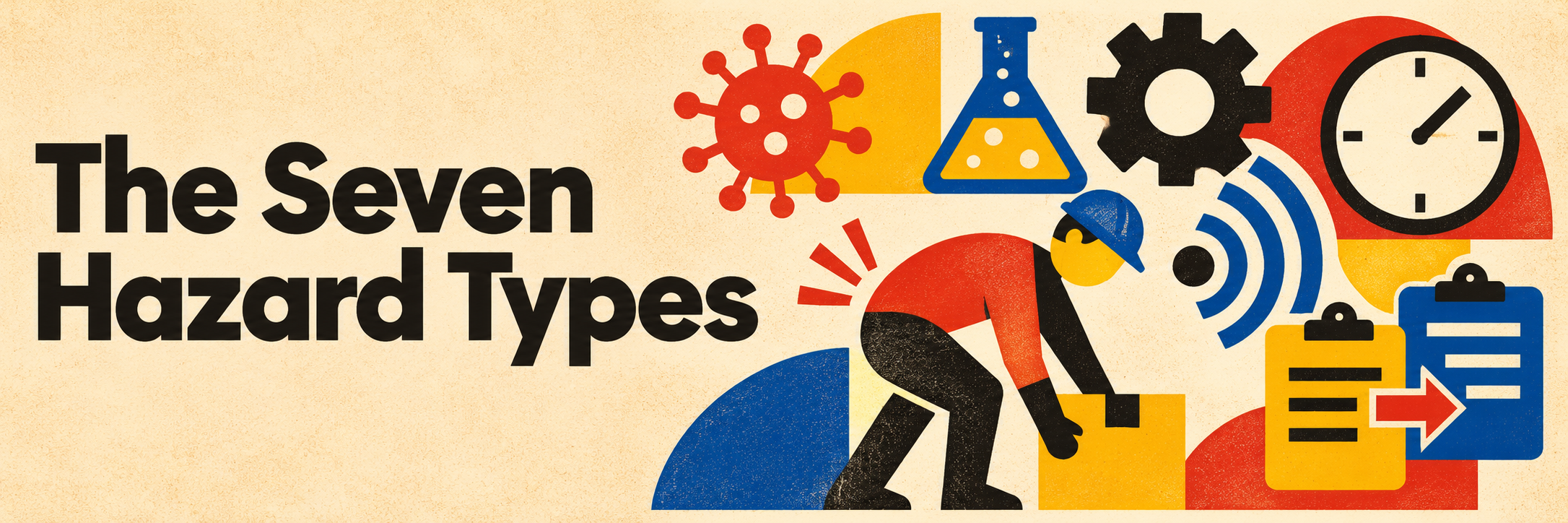
Use the seven hazard types below, recommended by Riskware, to classify the hazards you identify.
1. Biological hazards
 Biological hazards arise from exposure to organisms or biological material that can cause infection, allergic reactions or other illness.
Think of blood and body fluids in healthcare, mould during building remediation or sewage during maintenance.
Start by identifying how exposure could occur. If workers handle used sharps, for example, a sharps container within reach at the point of use helps reduce the need to carry an exposed needle. The controls should reflect the task and the route of exposure.
2. Chemical hazards
 Solvents, corrosive cleaners, welding fumes and respirable dust can all pose chemical hazards. Include contaminants generated by the work itself. A product inventory alone may miss the dust released when workers cut concrete or the fumes created during welding.
Use safety data sheets where applicable and observe how the substance is used or generated. Consider whether you can remove the process, substitute a safer product, or capture airborne contaminants at the source with suitable extraction.
3. Equipment hazards
 Machinery, vehicles and powered tools can expose workers to moving parts, uncontrolled movement and stored energy. A conveyor may be adequately guarded during production, yet expose a worker to a crush point when they clear a jam.
Review how equipment is operated, cleaned, cleared and maintained. Depending on the task, controls might include fixed or interlocked guards, physical separation of vehicles and pedestrians, or isolation and verification of hazardous energy before maintenance.
4. Ergonomic hazards
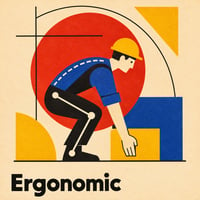
Ergonomic hazards arise when the demands of a task place strain on the body. High force, repetitive movements, awkward reaches and sustained postures can contribute to musculoskeletal injuries. A light carton can still pose a problem if a worker lifts it from floor level hundreds of times a shift.
Watch the task at its normal pace and ask workers where they feel strain. Raising the pallet, bringing stock closer or using a lifting aid can reduce the physical demands of the job.
5. Organisational hazards
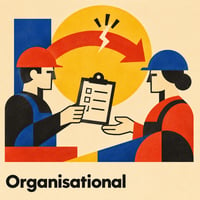 Organisational hazards arise from how work is planned, coordinated and supervised. Look for unclear responsibilities, conflicting instructions and incomplete handovers. During a shutdown, for example, two crews may each assume the other has confirmed that equipment is safe to work on.
Trace how decisions and information move between teams. Assign responsibility for critical checks, make equipment status visible and give outgoing and incoming crews time to confirm what remains unresolved.
6. Physical hazards
 Noise, heat, cold, vibration and radiation are physical hazards. Some are easy to overlook because exposure builds over time. For example, workers near a compressor may become accustomed to the noise while their hearing remains at risk.
Assess exposure under representative working conditions. Depending on the hazard, controls could include specifying quieter equipment, enclosing a noise source or shielding workers from radiant heat. Check that the control works while the job is running.
7. Psychosocial hazards
 Psychosocial hazards arise from work design, working conditions or workplace interactions and can cause psychological or physical harm. Examples include excessive job demands, low control over work, bullying, customer aggression and exposure to traumatic events. These hazards can overlap with organisational ones. Persistent understaffing, for example, can create excessive demands while also weakening handovers and supervision.
Consult workers about when and where exposure occurs. If customer aggression routinely escalates when one person staffs a service desk alone, review staffing, the layout and how quickly backup can arrive. The controls should address the conditions workers face.