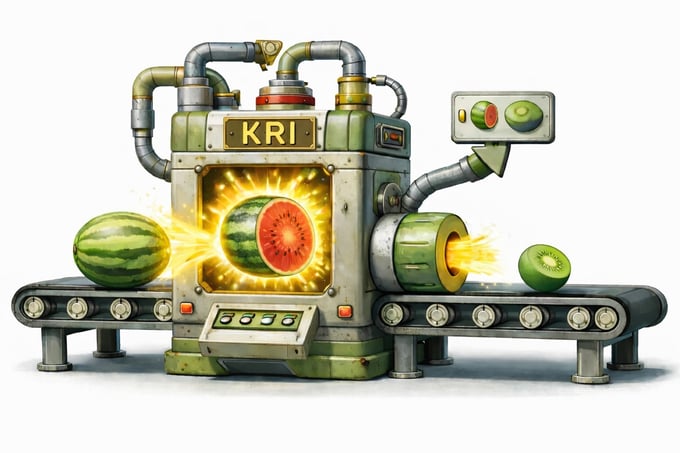
Many organisations unknowingly operate in what can best be described as a “watermelon risk environment.”
From the outside, everything appears green. Reports are positive, dashboards look healthy, and there is a general sense that risks are under control. But when you unpeel the outer layer into operational realities, frontline challenges, and emerging issues, the picture is very different. It’s red.
This disconnect is not uncommon. In fact, traditional risk reporting often relies on lag indicators, subjective assessments or periodic reviews that, while useful, can mask what is actually happening in real time. The result is a false sense of security, one where risks are already materialising before they are formally recognised.
This is where Key Risk Indicators (KRIs) play a critical role in mitigating the watermelon risk environment.
KRIs shift the focus from retrospective reporting to forward-looking insight. Rather than asking “what has already gone wrong?”, they help organisations understand “what signals suggest something may go wrong?”. They can be viewed as early warning detection systems to detect patterns, trends or anomalies that may indicate increasing exposure to risk
When designed well, KRIs provide a more honest and dynamic view of the risk environment. They surface subtle changes in behaviour, performance, or conditions that may otherwise go unnoticed. These could be small increases in incident frequency, delays in key processes, changes in staff turnover or fluctuations in customer complaints. Individually, these signals may seem insignificant, but together, they form a pattern that tells a much more accurate story.
Importantly, KRIs also create a level of objectivity. They move risk conversations away from opinion and toward evidence. This allows leaders to make decisions based on what is actually happening, rather than what is being perceived.
However, the true value of KRIs is not just in identifying risk, it’s in enabling action. By setting thresholds and monitoring trends, organisations can intervene earlier, address root causes and prevent issues from escalating. Over time, this builds confidence that the “green” being reported genuinely reflects the underlying reality. And this is where the transformation occurs.
With the right KRIs in place, organisations can move away from the uncertainty of a watermelon risk profile, and toward something far more reliable. A kiwi environment, where what you see externally is consistent with what is happening internally.
So when life gives you watermelons, KRIs help you change it to kiwi fruit - green on the outside. green on the inside.